 Arcade
 Skill
Skill Survival
What Is Speed Slope
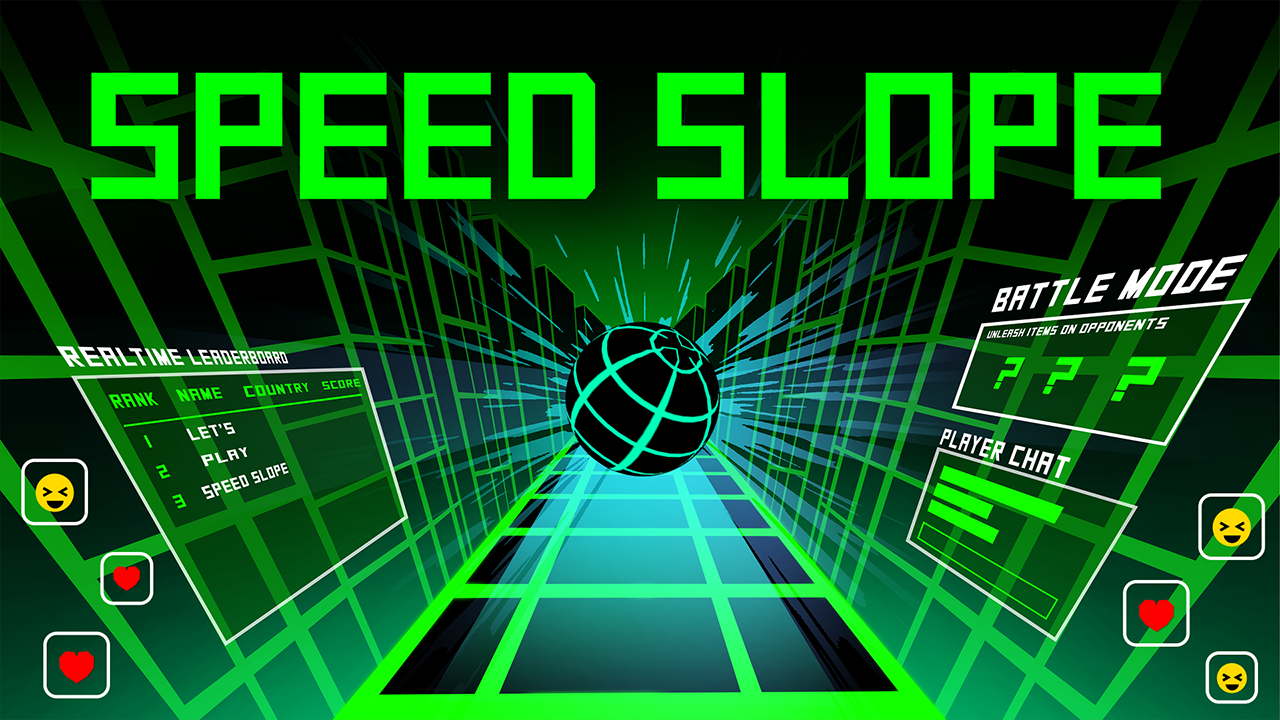
Speed Slope throws you onto glowing neon tracks at ever-increasing speeds, where a single wrong move sends your ball crashing into red barriers or flying off the edge. Released in 2026, this arcade runner draws from classic slope-style games but adds multiplayer battles and live leaderboards to the mix. The 3D neon visuals do more than look good—they help your eyes track movement when everything starts moving too fast to process.
The core hook is simple: survive as long as possible while the game keeps accelerating. Sharp corners, moving obstacles, steep ramps, and sudden gaps all stack together to test your reflexes. Speed Slope never pauses to let you breathe. The momentum builds naturally the longer you stay alive, turning short runs into tense concentration sessions where panic kills more players than the actual track layout.
How to Play
Controls
| Platform | Input |
|---|---|
| Keyboard | A/D or Left/Right Arrow Keys |
| Mobile | Touch to steer |
Core Rules
- Steer the glowing ball left and right to stay on the track
- Avoid red obstacles completely—contact means restart
- Do not fall off the edges
- Speed increases automatically over time; there is no brake
- In multiplayer, opponents can interfere with your run
Tips That Actually Help
Small adjustments beat hard turns. The ball responds to subtle inputs, and oversteering at high speed usually causes the crash you were trying to avoid. Look ahead on the track rather than staring at your ball—this gives you more time to react to tight corners after ramps. Stay near the center when the path allows; it creates more margin for error on both sides.
Ramps are double-edged. A clean landing keeps your run alive, but a bad angle launches you into space. When the speed gets uncomfortable and your hands feel shaky, slow your reactions slightly instead of tensing up. Many players report that the hardest part of Speed Slope is not the obstacles themselves—it is staying calm enough to think when the pace becomes overwhelming.
The instant restart after crashing feeds the "just one more run" loop. Each failure feels recoverable, and the gap between attempts is short enough that you rarely talk yourself out of trying again.