The Art of Destruction: Why Car Physics Simulator Works
In the crowded landscape of driving games, most titles reward careful navigation and precise control. Car Physics Simulator takes a refreshingly different approach: it celebrates failure. Rather than punishing crashes, the game transforms them into the primary source of entertainment, inviting players to systematically destroy high-performance vehicles in increasingly spectacular ways. This inverted design philosophy creates something genuinely unique—a driving game where the journey matters far less than the spectacular conclusion.
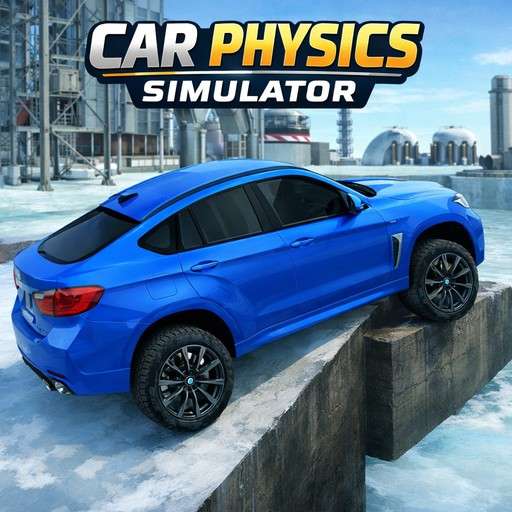
The industrial setting plays a crucial role in establishing the game's tone. Set within a massive steel manufacturing complex, the environment feels appropriately brutal and utilitarian. Massive launching platforms, unfinished concrete bridges, and deep construction pits populate the landscape. Everything exists to be crashed into, jumped over, or fallen into. The factory isn't merely a backdrop; it's a purpose-built destruction chamber designed to test vehicles to their absolute limits.
Core Design Pillars
The game rests on three fundamental principles that guide every design decision. First, there's the emphasis on realistic weight and momentum. Each vehicle in the garage features distinct weight distribution characteristics that fundamentally change how it handles ramps, collisions, and landings. A heavy luxury SUV feels substantially different from a lightweight sports car, and the game commits fully to these differences.
Second, the structural damage system rewards experimentation. Rather than a simple health bar, the game tracks actual physical deformation. Suspension compresses, chassis bends, and components detach based on impact force and angle. This creates a satisfying feedback loop where players can predict and plan for specific destruction outcomes.
Third, the sandbox structure eliminates frustration. With no time limits, score penalties, or artificial barriers, players face no punishment for failure. The instant reset mechanic means catastrophic crashes become learning opportunities rather than setbacks. This design choice fundamentally changes how players approach obstacles—they become experiments rather than challenges to overcome.
Car Physics Simulator How It Works
The gameplay loop centers on selecting vehicles and testing them against the industrial obstacle course. Players begin by choosing from a diverse garage featuring iconic sports models and heavy luxury off-road options. Each vehicle presents unique acceleration curves and handling characteristics, encouraging players to explore multiple options rather than mastering a single car.
The primary objective involves navigating through steel manufacturing zones filled with launching platforms, concrete barriers, and construction hazards. Players guide their selected vehicle across unfinished bridges, bumpy dirt surfaces, and precarious elevated pathways. The physics engine continuously tracks suspension compression and structural stress, providing real-time feedback on vehicle condition.
The control scheme offers comprehensive manipulation options:
- WASD or Arrow Keys: Primary vehicle movement
- Spacebar: Handbrake for controlled skids and drifts
- F: Nitro boost for explosive acceleration
- O: Vehicle selection menu access
- P: Pause functionality
- Q/E: Turn signal activation
- Z: Blinker controls
- V: Camera perspective switching
Camera controls deserve particular attention. The dynamic viewpoint adjustment allows players to observe vehicle trajectories from multiple angles, making it easier to plan approach angles for midair flips and calculate landing trajectories. This isn't just cosmetic—the camera becomes a strategic tool for planning destruction sequences.
The vehicle swap system enables comparative analysis. Players can instantly toggle between different car models to observe how each responds to identical impact scenarios. A muscle car's front-heavy weight distribution creates different crumple patterns than a balanced sports car, and the ability to directly compare these reactions in real-time adds an educational dimension to the destruction.
Progression and Engagement Systems
Car Physics Simulator employs a discovery-based engagement model rather than traditional progression. The game offers unrestricted exploration with zero time constraints or artificial score penalties. This design choice might seem counterintuitive for maintaining player interest, yet it proves remarkably effective.
The absence of external pressure transforms the experience into pure experimentation. Players find themselves returning to identical setups repeatedly, refining approach angles and testing theories about structural integrity. Each successful flip or satisfying crash becomes a personal achievement documented through observation rather than high scores.
The instant regeneration mechanic eliminates the most frustrating aspect of destruction-based gameplay: waiting. After sustaining catastrophic damage, players can immediately reset to pristine condition and attempt the same scenario again. This rapid iteration cycle keeps the experience flowing and maintains momentum even during ambitious experimental sequences.
Real-time deformation tracking provides ongoing feedback that sustains engagement. Watching suspension components compress during landing attempts or observing chassis flex during high-speed impacts creates a constant stream of visual information. Players develop intuitive understanding of vehicle physics through accumulated observation rather than explicit instruction.
Genre Context and Innovation
Car Physics Simulator occupies a distinctive niche within the broader driving game category. It borrows elements from multiple sources—the physics experimentation of dedicated simulation titles, the accessible controls of arcade racers, and the sandbox freedom of creative games. Yet it combines these influences into something that feels genuinely novel.
The game shares DNA with titles like BeamNG.drive in its commitment to realistic vehicle deformation, but strips away the complexity to focus purely on the destruction experience. Unlike traditional racing games that treat crashes as obstacles to avoid, Car Physics Simulator treats them as the primary content. This inversion of priorities creates a fundamentally different relationship between player and game.
The industrial setting differentiates the experience from typical stunt games. Rather than floating platforms or cartoonish environments, the steel manufacturing complex grounds the chaos in an appropriately industrial aesthetic. Ramps are made of metal, barriers are concrete blocks, and pits are genuine construction hazards. This visual consistency reinforces the simulation fantasy and makes destruction feel consequential.
The absence of multiplayer or competitive elements might seem like a limitation, but it actually strengthens the game's identity. Without external pressure, players can fully embrace the meditative quality of repeated experimentation. The game becomes a personal physics laboratory rather than a social experience, and this focus serves its core concept well.
Balanced Assessment
Car Physics Simulator succeeds through its singular focus and refusal to compromise its core concept. The realistic weight distribution and deformation systems create genuinely interesting physics interactions. The industrial setting provides appropriate context for destruction. The sandbox structure eliminates frustration and encourages experimentation.
The game does have limitations worth considering. With only two votes and limited play counts, the content library remains modest. The graphics, while functional, don't push visual boundaries. Players seeking competitive racing or complex simulation systems will need to look elsewhere.
Car Physics Simulator works best for players who enjoy physics experimentation and sandbox creativity. Physics enthusiasts will appreciate the realistic weight and momentum systems. Casual gamers seeking something different from traditional racing games may find the destruction focus surprisingly engaging. Players who enjoy watching things break apart will discover a surprisingly satisfying experience.
The game ultimately succeeds because it commits fully to its concept. Rather than attempting to be everything, it focuses intensely on one thing: making vehicle destruction entertaining. In this narrow focus lies its strength. For players seeking a physics sandbox experience centered on automotive experimentation, Car Physics Simulator delivers exactly what it promises—a chaotic industrial playground where the only goal is to see how spectacularly things can break apart.