 Skill
Skill Sports
What is Orbit Kick?
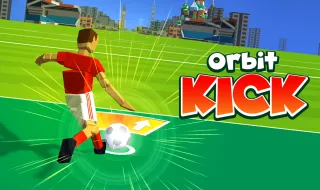
So there's this game I've been playing lately that I can't seem to put down. Orbit Kick is a casual arcade game with the simplest concept imaginable: you stand on a soccer field, you kick a ball, and you try to launch it as far as possible. That's the whole game.
The hook is a power meter that swings back and forth, and you need to tap at exactly the right moment to unleash maximum kicking power. Better timing means farther kicks, which means more coins, which means unlocking new environments and ball designs. I've lost way too many hours to this thing, and I keep telling myself "one more try" after every attempt.
What makes Orbit Kick work so well is how immediately satisfying it feels. The feedback is instant — your ball either flies far or it doesn't, and you know right away if you nailed the timing or blew it. The game uses famous world landmarks as distance milestones, so when your ball finally sails past the Eiffel Tower or the Pyramids, you feel a genuine rush of achievement.
How to Play Orbit Kick
The gameplay revolves entirely around one thing: timing your kick perfectly. Everything else is built around that single moment.
Controls and Core Mechanics
The power meter oscillates back and forth, and your goal is to tap or click when it reaches its absolute peak. That's the entire mechanic. Here's what that looks like in practice:
- Tap or Click: Press when the meter hits maximum power
- Hold and Release: Some versions let you hold to charge, then release at the peak
- Swipe: On mobile, an upward swipe works as an alternative
- Goal Aiming: Certain levels let you aim left or right for bonus points during launch
That's genuinely all there is to it. No combos to memorize, no complex button sequences — just one decision, one moment of concentration.
Getting Started Tips
Starting takes seconds. Watch the meter for a few cycles before your first kick to understand its rhythm. A perfectly timed medium-power kick consistently beats erratic max-power attempts, so focus on consistency first. Grab those bonus goals when they appear — extra coins compound over time. Small upgrades in the shop add up too.
If you notice your timing getting worse, take a short break. Fatigue affects precision more than you'd expect.
Once you have the basics down, try watching through several complete meter cycles before committing. Account for any slight input lag. Study which timing positions produced your best distances and replicate that feel. Small refinements compound, and those marginal gains separate good players from great ones.
Why Orbit Kick Works
Orbit Kick runs directly in your browser with no downloads required. The free-to-play model means you can try it instantly, and since progression is purely cosmetic, there's no pay-to-win nonsense. Whether you have five minutes or an hour, it fits any session length — and keeps pulling you back for one more attempt.