
Geometry Arrow 2 Strategy Guide
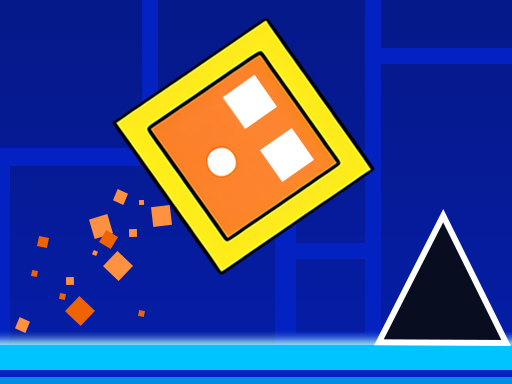
When you first load Geometry Arrow 2, the pulsing electronic soundtrack hits immediately, and you're thrust into a geometric cave alive with rhythm. This isn't just another reflex game—this is a precision-driven challenge where timing and spatial awareness determine your survival. Whether you're flying through obstacles in Arrow Mode, rolling through geometric hazards in Wheel Mode, or testing your aim in Archery Challenge, every action must sync with the beat. This guide breaks down everything you need to master Geometry Arrow 2, from basic controls to advanced techniques that separate casual players from rhythm masters.
Understanding Geometry Arrow 2's Core Gameplay
Geometry Arrow 2 presents a unique fusion of rhythm-based platforming and archery mechanics. The game takes place across six handcrafted levels set in a dazzling geometric cave, where every obstacle, every jump, and every arrow shot synchronizes with an intense electronic soundtrack. The developers clearly designed this experience for players who thrive under pressure and want their reflexes truly tested.
The core philosophy behind Geometry Arrow 2 is that rhythm, reflex, and precision define survival. You won't succeed through luck or brute force—you need to feel the beat and execute with exact timing. The game rewards players who can anticipate obstacles before they appear and maintain focus through increasingly complex patterns.
Geometry Arrow 2 Game Modes and Controls
Geometry Arrow 2 features three distinct game modes, each demanding different skills and offering unique challenges.
Arrow Mode serves as the classic Geometry Arrow experience. In this mode, you control an arrow or geometric shape flying upward through a cave filled with obstacles. Your controls are simple: press the spacebar, click your mouse, or tap your screen to jump and fly upward. The challenge comes from timing your jumps perfectly with the beat while avoiding the pulse-synced hazards that fill each level. Miss the rhythm, and you'll撞上障碍物 or fall short of your goal.
Wheel Mode introduces momentum-based rolling mechanics that fundamentally change your approach. Instead of flying upward, you control a wheel character that rolls through obstacles while incorporating jumping. Click or tap to jump and roll through gaps. This mode requires you to manage horizontal momentum while timing your jumps—release too early and you'll roll past the optimal position, wait too long and you'll crash into obstacles. The momentum carries you forward, so you need to anticipate obstacle placement rather than react to them.
Archery Challenge Mode separates Geometry Arrow 2 from typical rhythm games. Here, the beat takes a backseat to precision and patience. As an experienced archer, your mission is to hit geometric targets—some stationary, some moving—with perfect accuracy. Use your mouse to aim and release to shoot your arrow. Each successful shot earns points and advances you to the next level. As you progress, targets shrink, move faster, and appear in increasingly tricky positions. The key is aligning your shots carefully before releasing—rushing leads to missed shots and lost points.
Beginner Fundamentals
Starting Geometry Arrow 2 for the first time can feel overwhelming. The combination of music, obstacles, and multiple modes creates a sensory experience that demands your full attention. Here's what you need to know before your first session.
Listen to the beat before you move. Many beginners make the mistake of jumping immediately into action. Instead, spend your first few attempts just listening to the soundtrack while observing obstacle patterns. The music isn't background atmosphere—it's a timing mechanism that tells you exactly when hazards will appear. When you internalize the beat, your reactions become instinctive rather than conscious.
Start with Arrow Mode. This original mode establishes the foundation for everything else in Geometry Arrow 2. Master basic jump timing here before attempting Wheel Mode's momentum mechanics or Archery Challenge's precision demands. The skills you develop—rhythm awareness, obstacle anticipation, and controlled movement—transfer directly to other modes.
Focus on consistency over speed. The game's difficulty ramps up gradually, and early levels are designed to teach rather than punish. Resist the urge to rush. Each obstacle you successfully navigate builds muscle memory. Speed comes naturally as your confidence grows.
Learn the warning signs. Obstacles in Geometry Arrow 2 don't appear randomly—they follow patterns synchronized with the music. Watch for visual cues that precede dangerous sections. These might be subtle color shifts, geometric shapes appearing at screen edges, or changes in the music's intensity. Recognizing warnings gives you precious milliseconds to prepare.
Intermediate Strategies
Once you've survived your first few runs and understand the basic rhythm of Geometry Arrow 2, it's time to refine your approach. Intermediate players have the fundamentals down but need optimization strategies to progress further.
Identify the exact beat points. In Arrow Mode, obstacles align with specific musical cues. Instead of jumping continuously, identify the precise moments when jumps are necessary. This reduces wasted movements and keeps you synchronized with the soundtrack. Practice identifying the "downbeat" moments where hazards appear.
Develop momentum awareness in Wheel Mode. The transition from flying to rolling requires mental adjustment. Your jump timing must account for horizontal momentum, not just vertical lift. Experiment with different jump windows to find the optimal release point for each obstacle configuration. The goal is smooth, continuous movement that never requires sudden corrections.
Establish an aiming system for Archery Challenge. Don't aim reactively—develop a consistent process. First, identify your target. Second, check for movement patterns. Third, aim slightly ahead of the target's current position. Fourth, release at your peak confidence moment. This systematic approach removes hesitation and improves accuracy under pressure.
Study level progression. Geometry Arrow 2's six levels introduce challenges progressively. Early levels emphasize basic rhythm navigation. Mid-levels add momentum control and faster patterns. Later levels combine everything with precision shooting. Understanding this progression helps you anticipate what each stage demands rather than reacting to it.
Use failure as data. When you crash in Geometry Arrow 2, don't just restart immediately. Take a moment to analyze what went wrong. Did you miss the beat? Misjudge momentum? Rush your aim? Each failure contains information that, when processed, makes your next attempt more successful.
Advanced Techniques
Reaching mastery in Geometry Arrow 2 requires techniques that go beyond understanding the rules. These approaches separate good players from great ones.
Predictive movement. Instead of reacting to obstacles as they appear, anticipate where they'll be before they arrive. This requires deep familiarity with each level's layout and the soundtrack's patterns. When you know an obstacle will appear at a specific beat, you position yourself to pass through it effortlessly rather than scrambling at the last moment.
Rhythm compartmentalization. Train yourself to separate the musical elements into distinct layers. Identify the bass line that marks major beats, the hi-hats that mark subdivisions, and the melody that creates tension. Each layer can inform different aspects of your gameplay—the bass marks big jumps, the hi-hats mark minor adjustments, the melody signals when to slow down.
Combined mode thinking. The most skilled Geometry Arrow 2 players don't treat modes as separate challenges. They recognize that skills transfer between modes. Rhythm awareness from Arrow Mode improves timing in Archery Challenge. Momentum management from Wheel Mode helps anticipate obstacle movement in all modes. At higher levels, success comes from seamlessly transitioning between these skills.
Efficiency optimization. Every unnecessary movement costs time and breaks your rhythm. Advanced players minimize inputs to only those that matter. In Arrow Mode, this means jumping precisely when needed rather than bouncing continuously. In Wheel Mode, it means controlling momentum so you never overshoot or fall short. In Archery Challenge, it means aiming efficiently without excessive adjustment.
Mental state management. Geometry Arrow 2 punishes anxiety and rushing. Develop mental routines that keep you calm under pressure. This might be controlled breathing, positive self-talk, or simply accepting that failure is part of learning. The best players maintain composure even when targets shrink and obstacles accelerate.
Common Mistakes and How to Avoid Them
Even experienced players fall into patterns that limit their progress. Recognizing these mistakes helps you avoid them.
Jumping before observing. This is the most common beginner mistake. You see an obstacle and immediately jump, without considering the rhythm or timing. The result is mistimed jumps that either come too early or too late. Solution: Watch the obstacle approach, listen to the beat, then jump in sync with the music.
Prioritizing speed over accuracy. Geometry Arrow 2 rewards precision, not velocity. Rushing through levels guarantees crashes. The game's difficulty is designed so that perfect execution at moderate speed outperforms rushed execution at high speed. Solution: Focus on hitting each obstacle correctly before attempting faster runs.
Ignoring early warning signals. The game provides visual and audio cues before dangerous sections. Players who ignore these signals constantly find themselves surprised by obstacles. Solution: Train yourself to notice warning signs in the music and visuals. These cues exist precisely to give you preparation time.
Neglecting rhythm awareness. Many players approach Geometry Arrow 2 as a pure reflex game, treating the music as irrelevant background. This fundamentally misunderstands the game's design. The rhythm is the game—it's the timing system that makes obstacles predictable. Solution: Actively listen to the soundtrack. Let it guide your movements rather than fighting against it.
Inconsistent practice routines. Players who jump between modes randomly without focused practice rarely improve. Each mode requires specific skills that develop through deliberate repetition. Solution: Spend dedicated time on each mode individually before combining them. Master one aspect before moving to the next.
Key Takeaways
Geometry Arrow 2 is a challenging rhythm platformer that rewards precision, patience, and practice. The game succeeds when you sync your actions with its electronic soundtrack rather than fighting against it. Whether you're flying through geometric caves in Arrow Mode, rolling through obstacles in Wheel Mode, or testing your aim in Archery Challenge, the core principle remains the same: feel the beat, anticipate obstacles, and execute with exact timing.
Start your Geometry Arrow 2 journey by mastering Arrow Mode and developing rhythm awareness. Progress to Wheel Mode once you're comfortable with the basic jump mechanics. Finally, tackle Archery Challenge to test your precision under pressure. Remember that improvement comes through deliberate practice, not rushed attempts. Study your failures, celebrate your progress, and most importantly—enjoy the electrifying journey through rhythm and chaos that makes Geometry Arrow 2 a unique challenge in the platformer genre.