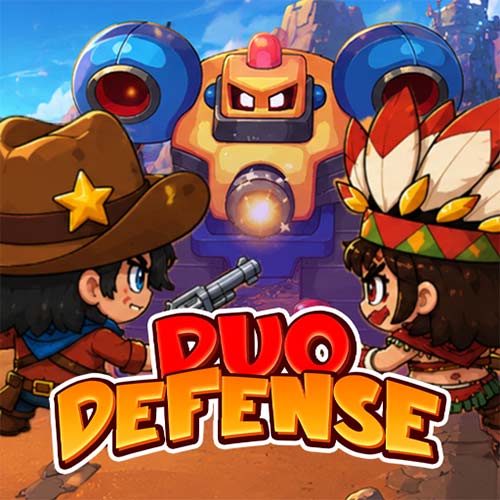
Duo Defense Strategy Guide: Master Dual-Hero Combat
Introduction
When enemies swarm from both directions and your castle's health bar shrinks by the second, you need more than luck — you need a plan. Duo Defense puts you in command of two heroes simultaneously, forcing you to think for two units at once while managing resources, upgrades, and enemy waves that grow increasingly brutal. This guide breaks down everything you need to know to survive longer, earn more coins, and ultimately build defenses that even the toughest enemy waves cannot break.
The core tension in Duo Defense comes from divided attention. While one hero holds the left flank, enemies might be breaching the right. While you focus on collecting coins from a defeated wave, a stronger unit sneaks through undetected. Understanding this dynamic — and learning to manage it — is the difference between crumbling early and reaching wave 50 with a fortress that laughs at incoming attacks.
Duo Defense Gameplay Mechanics
Understanding how Duo Defense actually works is essential before you can improve. Many players jump in, start attacking, and wonder why they keep losing despite seemingly strong heroes. The answer always lies in the mechanics they're ignoring.
Controls and Interface
Duo Defense uses a streamlined control scheme designed for rapid decision-making. Your heroes attack automatically when enemies enter their range — you don't click to attack. Instead, your role is positioning, timing, and resource management. Click on your heroes to switch their attack targets manually, or let the auto-targeting system handle enemies based on proximity.
The user interface displays several critical pieces of information. Your castle health sits prominently at the top center, represented by a health bar that changes color as damage accumulates — green when healthy, yellow when damaged, and red when critical. Below that, you'll find your coin counter, which updates in real-time as you defeat enemies and collect rewards. The upgrade menu, accessible between waves and during brief pauses, shows all available improvements with their costs and current levels.
Between waves, you'll see a countdown timer indicating when the next attack begins. Use this time wisely — rushing upgrades when a wave is about to start leaves you vulnerable during those crucial first seconds.
Wave System and Enemy Behavior
Enemies spawn in waves, with each wave containing more numerous and more dangerous foes than the last. Early waves (1-5) introduce basic enemy types that move slowly and deal minimal damage. These serve as practice — use them to build up your coin reserves and test your upgrade priorities.
By wave 10, you'll encounter enemies with increased health pools and faster movement speeds. Wave 20 introduces tank units that absorb significant damage before falling. Wave 30 brings elite enemies with special abilities, and beyond that point, expect combinations of multiple strong enemy types attacking simultaneously.
Enemies approach from both the left and right sides of the screen. Your two heroes are positioned to cover each approach, but they're not invincible. If enemies reach your castle, they deal damage based on their type — basic enemies might deal 5 damage, while elite units can deal 50 or more. Your castle has finite health, and once it reaches zero, the run ends.
Resource Economy
Coins serve as your primary currency in Duo Defense. You earn them through combat — defeating enemies rewards coins based on enemy difficulty. Basic enemies yield 5-10 coins, while elite units can drop 50 or more. Coins also accumulate passively at a slow rate, but combat remains the dominant source of income.
Managing this economy separates struggling players from successful ones. Spending coins too aggressively early leaves you unable to afford critical upgrades when challenges intensify. Hoarding coins too conservatively means falling behind the power curve, making later waves nearly impossible to survive.
Beginner Fundamentals
If you're starting Duo Defense for the first time, focus on these essential principles before experimenting with advanced tactics.
Hero Positioning Awareness
Your two heroes each cover a specific side of the battlefield. The left hero handles left-spawning enemies; the right hero handles right-spawning enemies. Sounds simple, but beginners often forget this separation during chaotic moments.
When an enemy spawns, watch which hero responds. If both heroes attack the same target while enemies approach from the opposite side, those enemies will reach your castle unopposed. Develop the habit of scanning both sides of the screen every few seconds, even when one side feels under control.
Upgrade Prioritization for New Players
Early in your Duo Defense career, resist the temptation to evenly distribute upgrades across all categories. Instead, focus on one hero at a time. Getting your first hero to a moderate power level is more effective than having two underpowered heroes.
Prioritize attack power upgrades first. Faster damage output means enemies die before dealing damage to your castle. Attack speed comes second — once your hero deals decent damage per hit, making them attack more frequently compounds that advantage. Health and castle upgrades become more valuable as you progress, but early on, offense wins games.
Coin Collection Habits
Coins appear where enemies die. When an enemy falls, coins spawn at their location and remain for several seconds before disappearing. Make coin collection a priority during gameplay — those small amounts add up significantly over a full run. Some players lose 20-30% of their potential income by ignoring dropped coins while focusing purely on combat.
Intermediate Strategies
Once you've survived past wave 15 and understand the basic flow, these strategies will help you push further and earn higher scores.
Balanced Upgrade Distribution
At the intermediate level, spreading upgrades becomes viable and often necessary. Your first hero shouldn't dominate all resources while the second hero falls behind. Instead, maintain both heroes at roughly similar power levels.
A practical approach: alternate upgrade priorities between heroes. If you upgraded Hero 1's attack power last time, upgrade Hero 2's attack power next. This creates a balanced defense where neither side becomes a weak point. One overpowered hero covering one strong side while the other crumbles is a common intermediate mistake.
Castle Defense Investment
Around waves 15-25, enemy damage output increases significantly. By this point, investing in castle health and defensive upgrades provides substantial returns. A castle with 20% bonus health can survive an extra elite enemy hit — and those extra hits often determine whether you complete a wave or lose everything.
Calculate your castle's effective health by multiplying base health by all applicable upgrade multipliers. If you can afford an upgrade that increases effective health by 15%, and you expect to face 3-4 elite enemies dealing 40 damage each, that upgrade might save your entire run.
Weapon Progression
Weapons in Duo Defense follow a progression path. Early weapons deal moderate damage at moderate speed. Mid-game weapons sacrifice attack speed for burst damage. Late-game weapons balance both, offering the highest sustained damage output.
As you unlock better weapons, immediately equip them — the stat increases typically outweigh any secondary effects. However, pay attention to weapon characteristics. Some weapons have wider attack ranges, which helps against fast enemies. Others deal area damage, useful when waves contain many weak enemies. Choose weapons that match your current challenges.
Timing Between Waves
The brief pause between waves offers a critical opportunity. Use this time to assess your castle's health, check your coin balance, and make upgrade decisions. But don't spend so long in menus that you enter the next wave unprepared.
A systematic approach: first, collect any remaining coins from the previous wave. Second, evaluate whether you need emergency castle repairs. Third, purchase one or two high-priority upgrades. Fourth, exit the menu with at least 5 seconds remaining before the countdown ends. Entering a wave while the menu is still open leaves your heroes in their previous positions, potentially missing early enemies.
Advanced Techniques
These techniques require practice and game knowledge but separate truly skilled Duo Defense players from the rest.
Micro-Targeting Control
While auto-targeting handles most situations adequately, manual target switching provides significant advantages in specific scenarios. When an elite enemy approaches alongside basic enemies, manually target the elite first — your hero's auto-targeting might waste attacks on weak enemies while the real threat advances.
To manually target, click on the specific enemy you want your hero to focus. This override lasts until the target dies or you select another target. Develop the habit of identifying high-priority threats and manually assigning your heroes to handle them.
Resource Timing Optimization
Advanced players time their major purchases to coincide with wave transitions. Spending 500 coins on a critical upgrade right before a wave begins means you enter combat with immediate advantage. However, spending 500 coins mid-wave, when enemies are already approaching, delays your response capability.
The optimal sequence: survive the current wave, collect all coins, then immediately purchase upgrades before the next wave countdown reaches zero. This creates a cycle where you always enter combat with your maximum available power.
Anticipating Enemy Composition
By wave 25+, you can predict enemy composition based on wave number progression. Wave 25 might introduce a tank enemy alongside basic units. Wave 30 definitely includes elite enemies. Use this knowledge to pre-position upgrades and adjust strategies.
If the next wave introduces tank enemies for the first time, prioritize high-damage upgrades over attack speed. If the next wave brings many weak but fast enemies, attack speed becomes more valuable. Adapting your upgrade strategy to anticipated challenges gives you advantages that passive players miss.
Efficiency Thresholds
Understanding diminishing returns helps optimize upgrade spending. Attack power upgrades might provide +10 damage at low levels but only +5 damage at high levels. At some point, investing in a different stat provides better returns.
Track your damage output after each upgrade. If upgrading attack power from level 10 to 11 increases damage by 5%, but upgrading attack speed from level 10 to 11 increases overall DPS by 8%, choose attack speed instead. This efficiency analysis, performed continuously throughout your run, maximizes your power per coin spent.
Common Mistakes and How to Avoid Them
Every struggling Duo Defense player makes these errors. Learning to recognize and avoid them dramatically improves your survival rates.
Mistake 1: Ignoring One Side Completely
The single most common failure mode is tunnel vision on one side of the battlefield. When you focus intensely on stopping a large enemy wave from the left, enemies from the right reach your castle unopposed. This often happens when you're managing upgrades or dealing with a particularly tough left-side threat.
The fix: develop a scanning habit. Every 3-4 seconds, quickly glance at both sides of the screen. If one side has no visible enemies, that's fine — but verify it rather than assuming. Most players who lose to this mistake assumed the other side was clear when it wasn't.
Mistake 2: Over-Upgrading Early
Spending all your coins on upgrades as soon as you earn them seems logical, but it creates vulnerability windows. If you spend 800 coins immediately after earning them, and enemies spawn in 10 seconds, you enter combat with maxed-out heroes but potentially dangerous enemies approaching before you've assessed the situation.
The fix: collect coins first, assess the wave composition, then decide whether to spend before the next wave or save for post-wave upgrades. Sometimes holding 200 coins through a wave means surviving it when you otherwise wouldn't.
Mistake 3: Uneven Hero Development
Neglecting one hero while maxing out the other creates a fatal weakness. Your strong hero might handle their assigned side perfectly, but enemies on the weak hero's side reach your castle easily. Eventually, that accumulated damage overwhelms your defenses.
The fix: set personal balance rules. Perhaps you never let one hero outlevel the other by more than 3 levels. Perhaps you alternate upgrades strictly. Whatever rule you choose, enforce it consistently.
Mistake 4: Failing to Adapt to Enemy Types
Some players use the same strategy regardless of enemy composition. They upgrade attack power constantly, never investing in castle defenses or specialized equipment. When elite enemies arrive and their unupgraded castle crumbles in two hits, they're confused about what went wrong.
The fix: assess each wave's threat level. If you see tank enemies or elite units appearing for the first time, consider defensive investments. Duo Defense rewards adaptation — rigid strategies eventually fail against escalating challenges.
Mistake 5: Not Collecting Coins
This seems obvious, but many players lose significant income by focusing entirely on combat and ignoring coin collection. Coins disappear after several seconds. If you're not actively moving to collect them during lulls in combat, you're leaving resources on the table.
The fix: designate time for coin collection between attack cycles. When your heroes are engaged with current enemies, focus on combat. When enemies are sparse, immediately hunt for dropped coins. This habit alone can increase your total income by 20-30% over a full run.
Key Takeaways
Mastering Duo Defense comes down to understanding a few core principles. First, balance is essential — between your two heroes, between offense and defense, and between immediate spending and saving for critical moments. Second, awareness wins games. Scanning both sides of the battlefield, tracking enemy compositions, and knowing when manual targeting overrides auto-targeting all stem from attentive play. Third, patience with the upgrade system pays dividends. Rushing upgrades without strategy leaves gaps in your defenses that waves of enemies will exploit.
Your immediate next steps: play one run focusing purely on understanding wave progression and enemy types. Play a second run focusing on balanced upgrade distribution between heroes. By your third run, you should have the foundation to reach wave 20 or beyond. From there, refining your efficiency, timing, and adaptation skills will push you further.
Duo Defense rewards players who think strategically while acting decisively. The dual-hero mechanic creates constant tension between divided attention and unified defense. Embrace that tension, develop habits that manage it, and your castle will stand against increasingly impossible odds.