
 Skill
Skill Action
 Simulation
The First Time I Accidentally Severed an Artery and Laughed Until I Cried
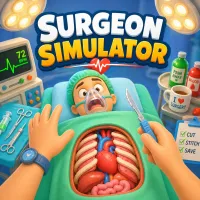
I still remember the first time I loaded up Surgeon Simulator. I was expecting something clinical, precise, maybe even a bit boring like those old medical training videos. What I got instead was one of the most hilariously frustrating experiences of my gaming life. Picture this: you're standing over a patient, scalpel in hand, and your goal is to perform a simple heart transplant. Sounds straightforward, right? Wrong. Your hand decides to spasm at the worst possible moment, you drop the scalpel directly into the patient's chest cavity, and suddenly everyone in the operating room is screaming. That was my introduction, and I've been hooked ever since.
A Game That Hates You (And That's the Point)
Surgeon Simulator doesn't try to hide the fact that it's going to make your life difficult. From the moment you gain control of that bumbling surgeon hand, you're fighting against every instinct you have. The controls are deliberately awkward, the physics are wildly unpredictable, and the margin for error is essentially zero. But here's the beautiful thing — that's exactly what makes it work. This game knows exactly what it's doing. It's not broken; it's intentionally broken, and there's a massive difference between the two.
The emotional journey of playing Surgeon Simulator follows a pattern that every player will recognize. First, there's confusion. You can't figure out why your hand won't do what you want it to do. Then comes frustration, which usually peaks around the time you accidentally fling a kidney across the room because you sneezed (or at least, that's what I tell myself happened). But after that comes the breakthrough moment — that magical instant when everything clicks, and you suddenly understand the rhythm of the chaos. That's when Surgeon Simulator transforms from a frustrating mess into an incredibly satisfying puzzle.
How to Actually Play Surgeon Simulator
Let me break down the controls because understanding these is absolutely crucial if you want to survive more than thirty seconds in the operating room.
Surgeon Simulator Controls:
-
A, W, E, R Keys: These control each of your individual fingers separately. This is where the real challenge begins. Each finger operates independently, which means you need to coordinate all four to grip objects properly. It takes serious practice to get a solid grip on anything.
-
Space Bar: This controls your thumb. You'll need this for grabbing objects and performing certain surgical actions. Combining thumb control with your finger controls is essential for any successful procedure.
-
Mouse Movement: This moves your entire hand around the operating table. The hand floats in 3D space, and you need to navigate it precisely where you want it to go. This sounds simple but becomes incredibly challenging when you're trying to coordinate it with finger movements.
-
Left Click: This lowers your hand toward surfaces and allows you to grab objects. Timing is everything here — press too hard and you might drop something important directly into the patient's open chest cavity.
-
Right Click (Hold): This rotates your wrist, giving you different angles for your tools and hands. Getting the right angle can mean the difference between a clean cut and a catastrophic disaster.
Core Mechanics:
The goal in Surgeon Simulator is always the same: complete the surgical procedure before your patient bleeds out. Every mistake you make causes more bleeding, and once the blood meter hits zero, it's game over. You need to pick up the correct tools, perform each step in the right order, and somehow manage to do all of this while your hands refuse to cooperate with your brain.
Strategy Tips:
First, practice your grip. Before attempting any actual surgery, spend time just picking up objects and getting used to how the fingers work. Second, take it slow. Rushing leads to dropped tools and severed arteries. Third, remember that different tools do different things — using the wrong instrument can make a simple procedure into an absolute nightmare. Fourth, watch your blood meter constantly. It becomes your most important piece of information very quickly.
Memorable Moments That Keep You Coming Back
After playing Surgeon Simulator for dozens of hours, certain moments become etched in your memory. There's the first time you successfully removed a kidney without turning the entire operating table into a crime scene — I actually cheered out loud, which probably concerned my roommates. There's the satisfaction of completing an entire operation without the patient flatlining, which feels like achieving world peace.
The game's dark humor really shines through in these moments. There's something absurdly funny about watching a surgeon's hand flail around wildly, dropping instruments, causing mass chaos, and somehow — against all odds — successfully completing a heart transplant. The developers clearly had a blast creating this experience, and that joy is infectious.
The physics engine deserves special mention. Objects bounce, roll, and fly in completely unexpected directions. A tool you carefully positioned might suddenly decide to launch itself across the room. Blood splatters in satisfying (and horrifying) ways. Everything feels weighty and real, which makes the chaos even more impactful.
Who Should Play Surgeon Simulator?
Here's my honest recommendation after spending way too much time with this game.
Surgeon Simulator is perfect for you if you enjoy physics-based chaos games, if you appreciate games that don't take themselves too seriously, and if you're looking for something that's genuinely challenging in a unique way. It rewards patience and practice, and there's nothing quite like the feeling of finally mastering a difficult procedure.
However, if you're looking for a realistic medical simulation, this isn't that. If you get frustrated easily with difficult controls, you might want to give this one a pass. And if you're squeamish about fake blood and cartoonish gore, the visual elements might not be for you.
For everyone else, Surgeon Simulator offers one of the most unique gaming experiences you'll find. It's funny, frustrating, challenging, and ultimately incredibly satisfying. Just remember to breathe, take your time, and never, ever sneeze while holding a scalpel.
The bottom line is this: Surgeon Simulator knows exactly what it is, embraces it completely, and delivers an experience that you won't find anywhere else. Give it a try — just maybe don't try this at home. Or in an actual hospital. Definitely not there.