
Rumble Rush Strategy Guide: Master the Chaotic Knockout Races
Every round in Rumble Rush is a high-stakes battle for survival. One moment you're leading the pack, the next you're flying off the map after a well-timed hit from a spinning hammer. This game rewards quick reflexes, smart power-up usage, and knowing when to play aggressive versus when to play safe. Whether you're jumping into your first match or looking to climb the ranks, understanding the core mechanics and advanced strategies will dramatically improve your survival rate.
Understanding Rumble Rush Gameplay
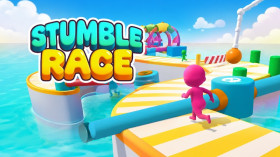
Rumble Rush throws players into fast-paced multiplayer races where the goal is simple: be the last blob standing. Matches feature cute, colorful characters that slam, dash, and bump their way through increasingly dangerous obstacle courses. Unlike traditional racing games where crossing the finish line first matters most, Rumble Rush uses an elimination format where players are knocked out until only one remains.
The arenas in Rumble Rush are packed with hazards designed to punish mistakes. Moving platforms shift beneath your feet, spinning hammers sweep players off ledges, and falling tiles force you to stay constantly aware of your surroundings. Power-ups spawn throughout the map, offering temporary advantages like speed boosts, pushing attacks, or defensive shields. The combination of environmental hazards and combat items creates a constantly shifting battlefield where positioning and timing are everything.
Each match consists of multiple short rounds, typically lasting 60-90 seconds each. Players earn in-game currency by finishing races, surviving longer, and completing daily objectives. This currency unlocks new colors, costumes, and visual trails in the shop, allowing you to customize your runner's appearance. Progress carries across sessions when you create an account, though you can jump into quick games as a guest if you just want to play immediately.
Controls and Movement
Mastering your controls is the foundation of everything else in Rumble Rush. The game supports both keyboard and mouse, with full controller and touch screen compatibility for mobile players.
Movement Controls:
-
WASD or Arrow Keys: These are your primary movement controls. W and Up Arrow move forward, S and Down Arrow move backward, while A/D and Left/Right arrows handle strafing. Get comfortable switching between these layouts since your reaction time depends on muscle memory.
-
Space Bar: This handles jumping, but it's also your tool for diving over gaps and performing quick dodges. In Rumble Rush, jumping isn't just for reaching higher platforms—it's essential for crossing moving gaps and evading incoming attacks. Hold Space slightly longer for a higher jump, or tap it for quick hops that save time.
-
Mouse: Controls camera rotation and view direction. While not essential for basic movement, mastering camera control lets you spot incoming hazards and enemies more easily. Many players overlook this until they're already comfortable with basic movement.
-
Left Click / On-screen Button: Activates your current power-up. Power-ups are context-sensitive, so timing matters more than rapid clicking.
Advanced Movement Tips:
- Practice combining jumps with directional movement to navigate tight spaces between spinning obstacles
- Use the environment's momentum—sometimes letting a moving platform carry you is faster than fighting against it
- When falling, you can often redirect your trajectory mid-air using directional inputs
Beginner Fundamentals
Before attempting aggressive plays, every new player needs to internalize these core principles.
Survival First, Attacks Second Your primary objective in early rounds is simply to outlast other players. Aggressive play feels exciting but frequently results in early eliminations. Focus on learning the maps, understanding hazard timing, and developing consistent movement patterns before attempting to actively knock opponents off platforms.
Learn the Hazard Patterns Each arena in Rumble Rush follows predictable patterns once you watch for them. Spinning hammers rotate at consistent speeds, moving platforms follow set paths, and falling tiles give brief warnings before collapsing. Spend your first several matches just observing. Note which platforms move, where the hammer rotations create blind spots, and which areas tend to cluster players together.
Positioning Determines Survival The center of moving platforms is generally safest—edges get you knocked off more easily. When navigating tight corridors, stay slightly behind the midpoint so you can react to players charging from ahead. In areas with falling tiles, identify the stable paths and stick to them rather than trying to take shortcuts.
Power-Up Prioritization Not all power-ups are equal, and grabbing the wrong one at the wrong time gets you killed. Shields are best used when you're in a vulnerable position or about to cross a dangerous zone. Speed boosts excel for escaping threats or reaching advantageous positions. Push and blast items work best when you have a clear shot at an opponent or narrow passage. Don't grab power-ups reflexively—evaluate whether your current situation benefits from the item.
Intermediate Strategies
Once survival becomes automatic, you can shift focus to actively influencing match outcomes.
Controlled Aggression The transition from defensive to aggressive play separates intermediate players from beginners. Instead of waiting for hazards to eliminate opponents, start using environmental positioning to your advantage. Force opponents toward edges, time your movements to coincide with incoming hazards, and use power-ups to create openings where none existed.
Map Control and Chokepoints Every arena has positions that are easier to defend than attack. Identify these chokepoints—narrow passages, single-platform bridges, areas with good sightlines—and fight to control them. Holding a chokepoint lets you eliminate players trying to pass while minimizing your own exposure to hazards.
Power-Up Timing Rather than using power-ups immediately upon grabbing them, develop a sense for optimal timing. A shield used too early provides no benefit when you need it most. A push item wasted on an empty area leaves you defenseless. The best players hold power-ups until specific moments: a shield when an opponent charges, a blast when multiple enemies cluster near an edge.
Reading Other Players Watch how opponents move and adapt your strategy accordingly. Aggressive players telegraph their charges with movement patterns. Defensive players often retreat to the same safe zones repeatedly. Players focused on power-ups expose themselves at spawn points. Adjust your approach based on what you observe in each match.
Advanced Techniques
These strategies separate good players from great ones in Rumble Rush.
Hazard Manipulation Advanced players learn to use environmental hazards as weapons rather than just threats. Position opponents near spinning hammers, time your movements so falling tiles catch enemies trying to follow you, and use moving platforms to carry opponents into danger zones. The best kills in Rumble Rush often come from clever positioning rather than direct combat.
Predictive Movement Instead of reacting to what opponents do, predict their actions and position yourself to capitalize. When you see an opponent heading toward a power-up, move to intercept or prepare an attack for when they emerge. When players cluster near an edge, anticipate someone will try to push or blast them off and position yourself to either execute the play or avoid the chaos.
Economy Management In the long term, maximizing your currency earnings accelerates your progression significantly. Prioritize daily objectives—they offer the best return on time invested. In matches, balance risk and reward: pushing for better finishes yields more currency but risks early eliminations that waste your time. Track which objectives you're closest to completing and adjust your play style accordingly.
Mental Stamina Rumble Rush matches are mentally exhausting at high levels. The constant awareness, rapid decisions, and physical execution drain your concentration over time. Develop routines between matches: brief stretches, eye breaks, and moments to reset your focus. The best players maintain consistent performance across long sessions by managing their mental energy deliberately.
Common Mistakes and How to Avoid Them
Chasing Kills Too Aggressively New players often sacrifice their position to pursue eliminations. This typically results in both you and your target falling to hazards, accomplishing nothing. Instead, focus on your own positioning and let eliminations happen naturally through the environment and opponent mistakes.
Ignoring Power-Up Spawns Failing to track power-up locations leaves you at a constant disadvantage. Make a habit of glancing at spawn points during safe moments. The difference between having a shield and not having one often determines whether you survive a crucial moment.
Panic Jumping When under pressure, beginners often spam the jump button, which frequently launches them into hazards or off platforms. Instead, jump deliberately: assess the threat, calculate your escape route, and execute a single, purposeful jump.
Overcommitting to Single Rounds Rumble Rush matches are short, and getting frustrated after one bad round clouds your judgment for the next. Accept that eliminations happen, learn from each death, and move on. The players who improve fastest maintain emotional equilibrium across many matches rather than getting tilted by individual losses.
Neglecting Mobile Optimization Touch controls require different timing than keyboard and mouse. If you play on mobile, invest time in customizing your control layout and sensitivity settings. Small adjustments dramatically improve your ability to execute precise movements under pressure.
Key Takeaways
Rumble Rush rewards players who combine survival instincts with strategic aggression. Start your journey by prioritizing positioning and learning hazard patterns over seeking eliminations. As you develop consistency, introduce controlled aggression and power-up timing into your play style. Finally, master hazard manipulation and predictive movement to consistently outperform opponents at your skill level.
Remember: every round is a new opportunity to apply what you've learned. The players who improve fastest are those who analyze their deaths, adjust their approach, and maintain focus across many matches. Jump in, stay patient, and watch your survival rate climb as these strategies become second nature.